No Single Point of Failure: Redundant Leak Detection for AI-Era Data Centers
No Single Point of Failure: Redundant Leak Detection for AI-Era Data Centers
Introduction
As liquid cooling becomes a standard fixture in modern data center design, driven by the rapid expansion of hyperscale facilities and high-density AI compute infrastructure, leak detection has transitioned from a secondary precaution to a mission-critical necessity.
In this high-stakes environment, engineers and consultants frequently pose a vital question:
"If a monitoring panel fails or a cable is physically damaged, can the system still detect a leak and trigger an alarm?"
At TTK, the answer is a definitive yes. Our systems are engineered to withstand localized failures through two distinct architectural pillars: Dual-Panel Redundancy and Structural Cable Resilience.
1. Built-In Panel Redundancy Architecture
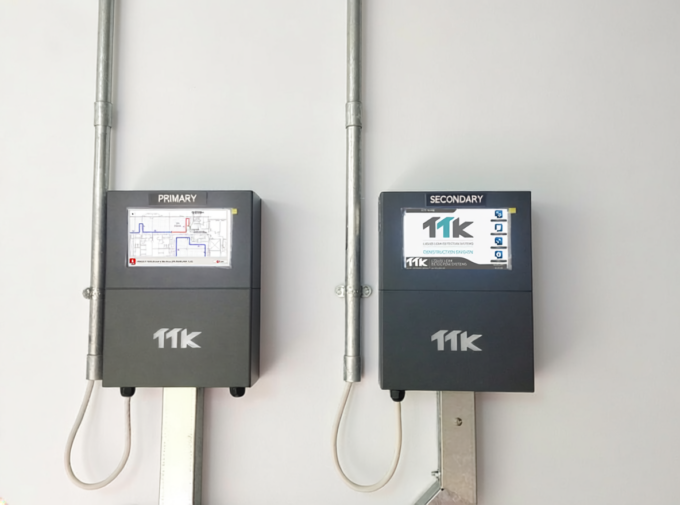
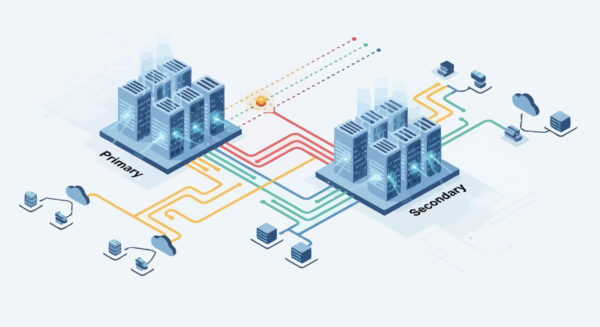
To eliminate the single point of failure at the supervisory level, TTK systems support a Master/Standby dual-panel configuration. This ensures continuous monitoring even during a total hardware failure of a primary controller.
Architecture Overview:
- Automatic Switchover: A dedicated power-fail relay manages the transition between panels without requiring manual intervention.
- Active Redundancy: A secondary panel (e.g., FG-NET) remains on permanent standby, synchronized with the primary unit.
- Instant Cutover: If the primary panel loses power or suffers a processor fault, the secondary panel assumes full control of the sensing string instantly.
Compatibility: Native support for this redundant configuration is available within the TTK range, including the FG-NET and FG-ALS4 monitoring panels.
2. Sense Cable Resilience: A Structural Differentiator
Unlike standard sensing wires, TTK sense cables utilize an advanced multi-layer design engineered to maintain system integrity even when subjected to mechanical damage. The cable is composed of two independent layers:
- External Detection Layer: The active sensing element, designed for high-sensitivity contact with the environment.
- Internal Communication & Power Core: A fully shielded, reinforced core that handles data transmission and power.
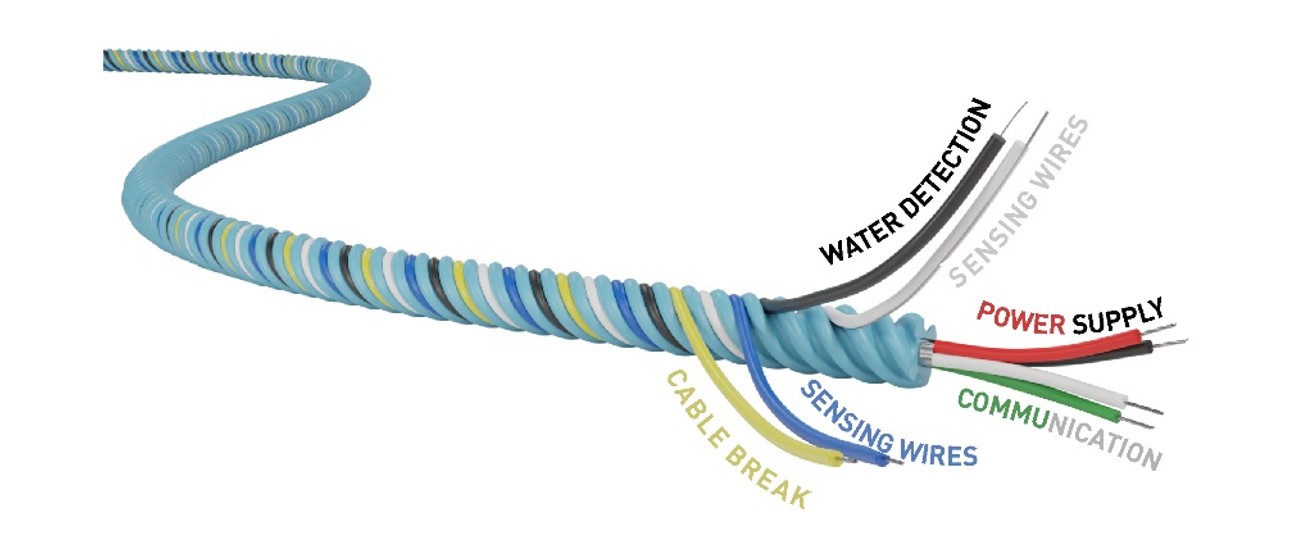
The Engineering Advantage: In real-world installation environments, cables are often subjected to mechanical stress, sharp bends, or accidental abrasion. Because the communication core is physically isolated from the external sensing jacket, the cable remains functional even if the outer layer is compromised.
Statistical Reliability: In approximately 99% of field damage scenarios, the communication core remains intact. The system continues to monitor downstream segments and transmit alarms without interruption, ensuring that a localized "nick" doesn't create a system-wide "blind spot."
3. Why This Matters for Critical Infrastructure
Redundancy is a fundamental requirement for power (UPS) and cooling (N+1/2N) in the data center. TTK extends this same rigor to leak detection. This is especially critical in environments where:
- AI & High-Density Clusters: The proximity of coolant distribution units (CDUs) to high-value GPU clusters makes undetected leaks an immediate financial and operational risk.
- Contractual Uptime: For colocation providers, continuous monitoring is often a Tier-standard or SLA requirement.
- Mechanical Stress: In complex under-floor or in-rack routing, cable resilience is the only way to ensure long-term reliability.
4. Conclusion
TTK is committed to the philosophy that leak detection should meet the same resilience standards as the servers it protects. By integrating redundancy in our system, we provide a resilient environment for the world’s most demanding digital infrastructure.
We invite design teams and consultants to move beyond basic detection and adopt redundant monitoring as the new baseline for critical facilities.
For technical specifications, Modbus/BMS integration guidance, or project support, please contact your regional TTK office.
Web: www.ttkuk.com | www.ttkusa.com | www.ttk.fr | www.ttk-gmbh.de | www.ttkasia.com