6 Signs Your Leak Detection System Needs an Upgrade
6 Signs Your Leak Detection System Needs an Upgrade
— Including One You Probably Haven't Considered
Your leak detection system was probably installed, tested, and then handed over to the background. No news is good news — until it isn't. Data center environments change faster than protection systems get reviewed: new cooling architectures (liquid cooling), tighter uptime commitments, leaner on-site teams.
Here are six signs that your leak detection system is no longer keeping pace with the facility it is supposed to protect.
- Your System Has No Battery Backup
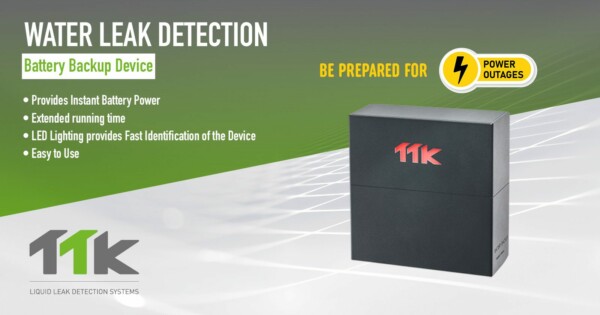
A power failure and a leak occurring simultaneously is not an unlikely scenario — it is exactly the kind of compound event that escalates incidents. Planned maintenance windows, partial distribution board outages, and UPS switchovers all create brief periods of unmonitored exposure where a mains-dependent system goes dark. If your system has no battery backup module, there are regular intervals where your facility is unmonitored without anyone realising it. TTK's Battery Backup module is available as an add-on to the FG-NET alarm unit. Learn more here.
- False Alarms Are Becoming a Routine Occurrence
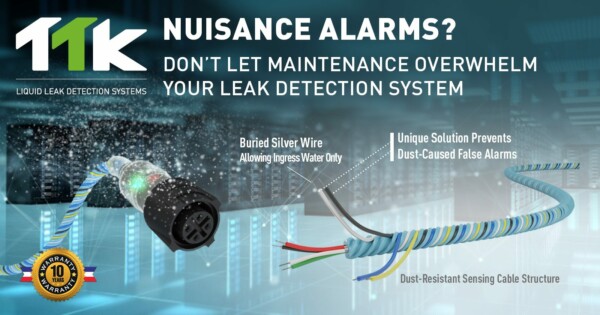
When alarms become background noise, your protection disappears. After repeated false triggers — often caused by dust accumulation or nearby metal parts creating accidental electrical contact between sensing wires — teams stop treating alerts as urgent. In the worst cases, the system simply gets switched off.
The root cause is usually the cable technology itself: conventional designs expose sensing wires on the surface, making them vulnerable to environmental contamination. If your team has learned to second-guess leak alarms, the system has already failed operationally. To learn more about dust-resistant sense cable technology, read our article here.
- You Have Deployed Liquid Cooling — But Your Sensors Have Not Kept Up
Direct liquid cooling introduces conductive coolant mixtures — typically propylene glycol-based fluids — that standard water sense cables may not reliably detect. The conductivity profile is different from water, and the risk zone shifts from the raised floor to overhead pipes, high-density compute rows and cooling manifolds.
If your facility has added DLC or rear-door heat exchangers without updating the sensing layer to include coolant-specific point sensors, you have an unmonitored blind spot in your highest-value equipment zone. Discover the right sensing solution for liquid cooling applications here.

- Your System Demands Heavy Maintenance
Leak detection is critical infrastructure — but it should not become a maintenance burden. Older analog cable systems accumulate environmental contamination over time, requiring periodic cleaning and recalibration to remain reliable. In practice, this rarely happens on schedule, leaving the system progressively degraded between inspections.
Modern addressable digital cables as TTK’s FG-EC smart cable range are designed to tolerate dust and conductive residue without affecting performance — eliminating the need for preventive cleaning entirely. Commissioning and troubleshooting are equally simplified: no calibration, no manual mapping, just a single scan from the monitoring panel to verify all connected cables. – learn more about smart cable here.
- Your System Is an Island
A leak detection system that operates in isolation — no integration, no remote visibility, no automated response — is a system that depends entirely on someone being physically present when something goes wrong.
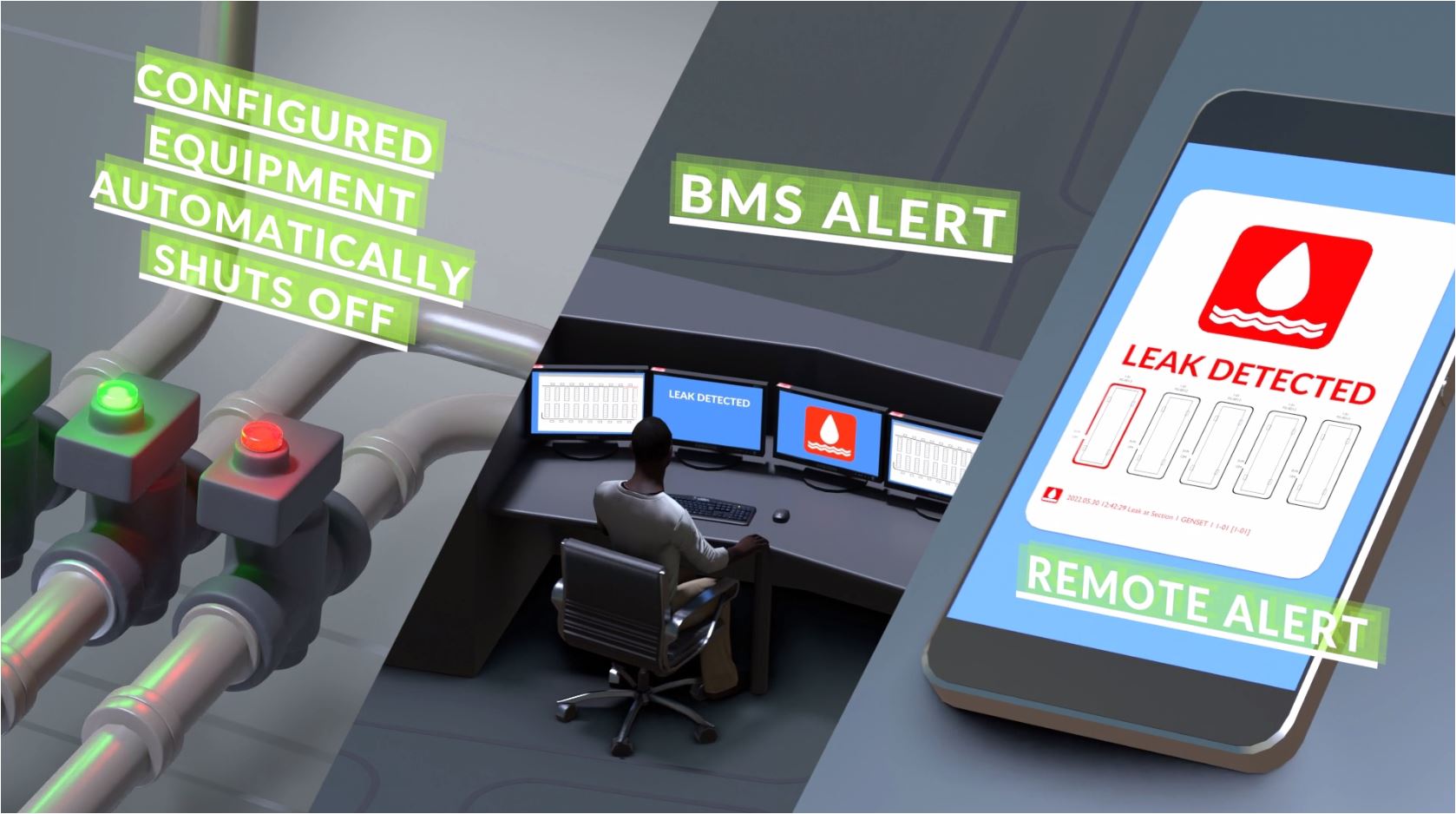
Modern facilities centralise all infrastructure monitoring into BMS, SCADA, and DCIM platforms. Leak detection should feed into these environments natively, via standard communication protocols — Modbus, RS232, or RS422/485 — so that a leak event appears alongside power, cooling, and environmental data in a unified dashboard, wherever that dashboard is being monitored from.
Beyond integration, the next level is remote operability. TTK's TTKweb software enables teams to monitor multiple sites wherever in the world in real time and trigger an immediate response at the moment a leak is detected — closing a valve, isolating a circuit — without anyone needing to be on site. Find out more here.
- Your System Has No Cybersecurity Credentials
Leak detection systems are increasingly networked — integrated into BMS platforms, accessible via web interfaces, communicating over IP. That connectivity is an operational asset, but it also introduces a security surface that many legacy systems were never designed to address.
A detection system with no authentication controls, no encrypted connections, and no network access management is a potential entry point into your facility's broader infrastructure. Yet cybersecurity is rarely the first thing that comes to mind when reviewing a leak detection system — which is precisely why it is so often overlooked until an audit flags it.
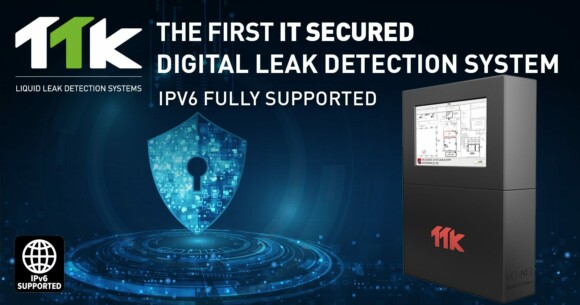
TTK's FG-NET panel provides HTTPS with TLS 1.2 encryption, certificate-based authentication, IEEE 802.1X network access control, and automatic login lockout — fully compliant with current enterprise security requirements. Furthermore, it fully supports IPv6. If your system cannot answer basic cybersecurity questions during an audit, it is a liability beyond the physical risk it was installed to manage.
A leak detection system is only as reliable as its weakest link—whether it’s a cable that overreacts, a sensor unsuited to the liquid it’s supposed to detect, a control unit that shuts down during a power outage, or network equipment that fails a security audit. The good news is that each of these shortcomings can be corrected. The question is whether you identify them at your own pace—or under pressure, after an incident.
Unsure whether your current setup covers your risk? Talk to our team for a detection audit here.